Sunshine 811: Call Before You Dig in Panama City
Before you dig anywhere in Panama City — a fence post, a landscaping project, a new footing — Florida law points to one specific service. Here's what Sunshine 811 actually requires.
ReadPanama City, FL guide
Hurricane season isn't a single date on the calendar — it's a months-long window with a real peak. Here's how to plan storm-debris prep and dumpster timing across Bay County before the season, not after.
The Atlantic hurricane season officially runs June 1 through November 30 each year, per NOAA and the National Hurricane Center. Within that six-month window, there's a real statistical peak running roughly from mid-August through mid-October — a stretch that squarely covers Hurricane Michael's actual October 10 landfall date. Knowing that peak matters for practical planning: the highest-risk weeks of any given season are also the weeks when dumpster availability across Bay County tends to tighten fastest, simply because demand for storm prep and storm cleanup both spike at once.
Hurricanes aren't the only source of storm debris here. Bay County has recorded real tornado activity outside of hurricane season entirely — an EF3 tornado on January 9, 2024, and an EF2 tornado on March 18, 2022 — and even experienced a genuinely rare Gulf Coast snow event in January 2025 that brought up to 6 inches of snow to the area. None of these are exaggerated for effect; they're documented events, and together with hurricane season they're part of why storm-related debris removal is a steady, year-round part of what we do rather than a purely seasonal service.
The most effective hurricane-season prep happens before a storm is even named. Trim dead or overhanging limbs well ahead of peak season — a tree that looks fine in July can be the debris that damages your roof in September. Walk your property for loose items — fencing, outdoor furniture, anything that can become wind-driven debris — and have a plan in place for who you'll call the moment it's safe to assess damage, rather than starting that search mid-storm season when everyone else is calling too.
If a storm is approaching and you have accumulated yard debris — downed limbs from an earlier storm, a large landscaping pile — getting it off the property and into a container ahead of time removes material that would otherwise become airborne debris in high winds. This is exactly the kind of proactive cleanup that's easy to put off and genuinely useful to do early.
Once a storm has passed and it's safe to assess your property, speed matters — wet material left in place invites mold, and a fast cleanup plan keeps a bigger job from getting bigger. Call as soon as it's safe, describe what you're clearing, and we'll size a container for the job rather than making you guess.
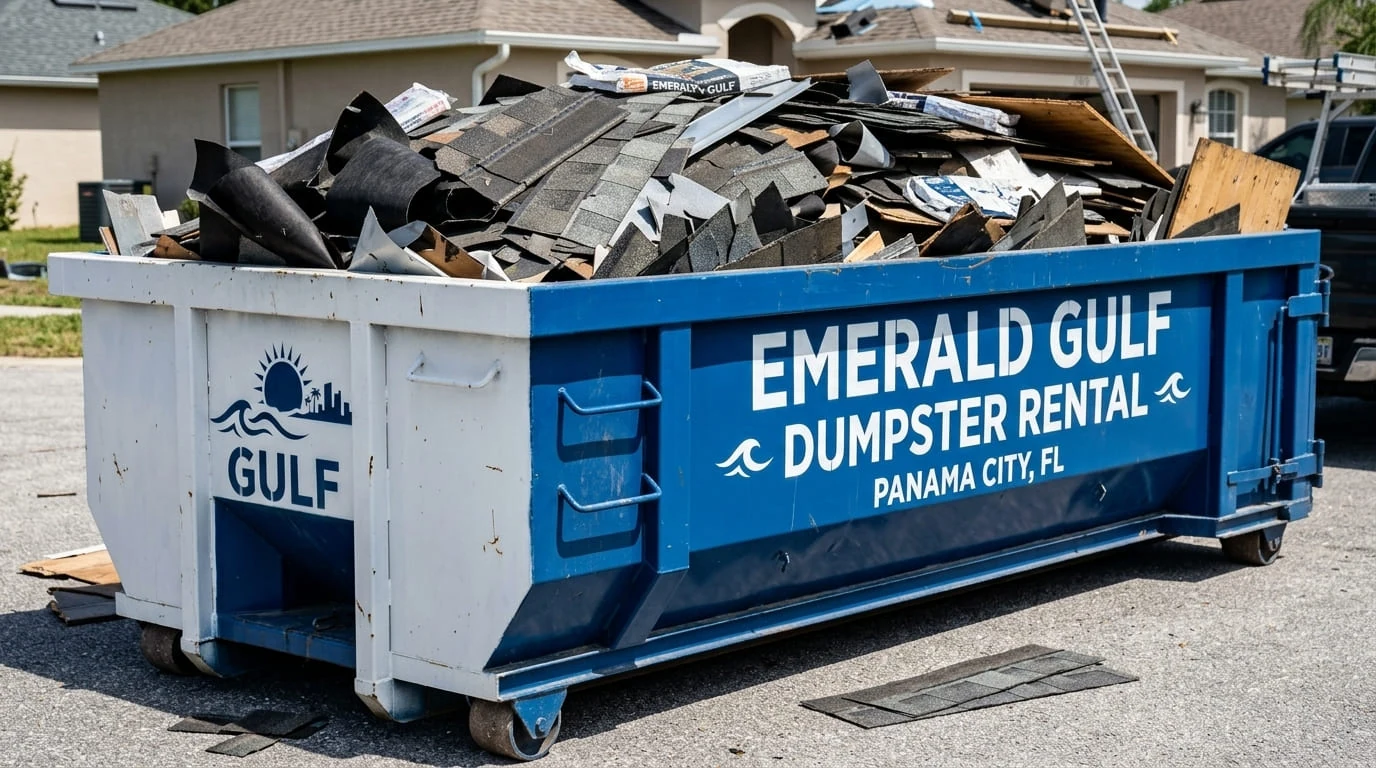
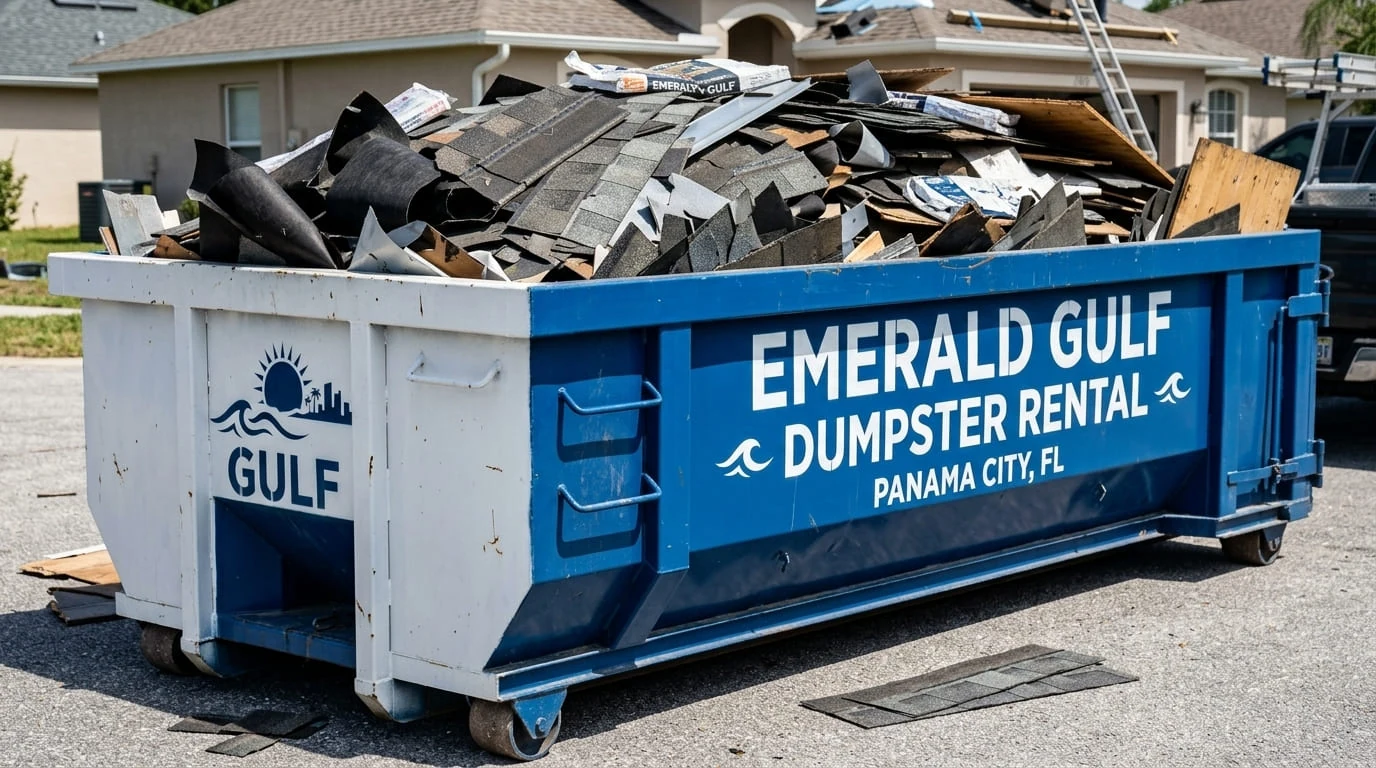
Routine yard-debris and pre-storm cleanup often fits a 10 or 15 yard. Storm-damage cleanup involving roofing, downed trees or flood-affected material more often calls for a 20 or 30 yard.
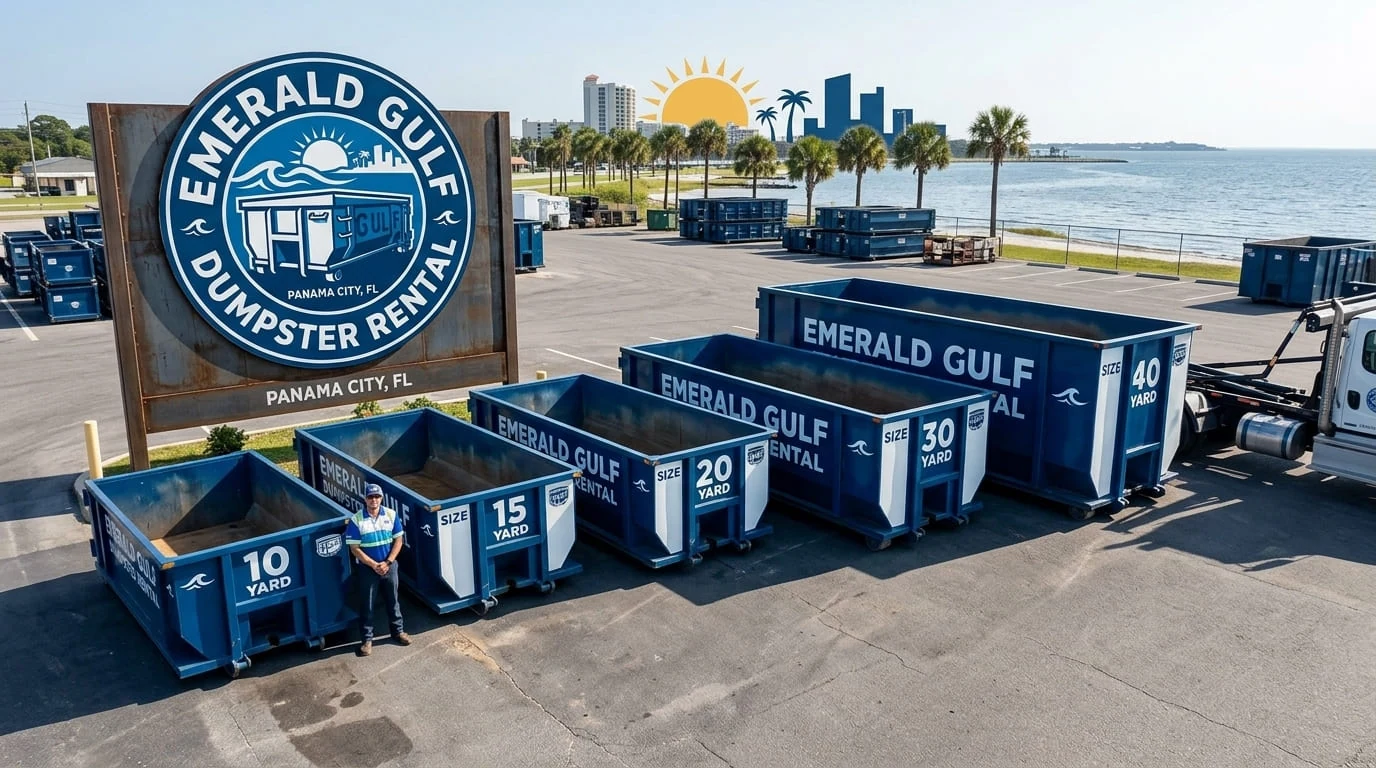
| Size | Dimensions | Capacity | Weight included | Best for |
|---|---|---|---|---|
| 10 Yard Dumpster | 14 ft long × 7.5 ft wide × 3.5 ft high | 50–70 bags | 1–2 tons | Small cleanouts, roofing shingles, tight driveways. |
| 15 Yard Dumpster | 16 ft long × 7.5 ft wide × 4.5 ft high | 80–100 bags | 2–3 tons | Flooring, bathroom or kitchen updates, multi-room cleanouts. |
| 20 Yard Dumpster | 22 ft long × 7.5 ft wide × 4.5 ft high | 110–130 bags | 3–4 tons | Medium remodels, roofing jobs, light construction. |
| 30 Yard Dumpster | 22 ft long × 7.5 ft wide × 6 ft high | 170–190 bags | 4–5 tons | Whole-home projects, office cleanouts. |
| 40 Yard Dumpster | 22 ft long × 7.5 ft wide × 8 ft high | 230–250 bags | 5–6 tons | Large builds, commercial or industrial jobs. |
Call (850) 919-4407 before the season's peak weeks arrive, and again the moment it's safe to assess any storm damage. We'll size the container and get it delivered as quickly as our schedule allows, priced flat-rate throughout.
Talk to a real person
Call and describe the job. Flat-rate pricing, a sized container, and a delivery time on the same call.
Mon–Sat 7:00am – 7:00pm
From this guide
The Atlantic hurricane season officially runs June 1 through November 30, with a statistical peak running roughly mid-August through mid-October.
Yes — the area has recorded an EF3 tornado on January 9, 2024, an EF2 tornado on March 18, 2022, and even a rare Gulf Coast snow event in January 2025 with up to 6 inches of snow.
Both, ideally. Clearing existing yard debris before a storm reduces wind-driven debris risk, and calling as soon as it's safe after a storm gets your cleanup moving fast.
Routine pre-storm yard-debris cleanup often fits a 10 or 15 yard. Storm-damage cleanup involving roofing or downed trees more often calls for a 20 or 30 yard.
Keep reading
Before you dig anywhere in Panama City — a fence post, a landscaping project, a new footing — Florida law points to one specific service. Here's what Sunshine 811 actually requires.
ReadShingles are dense, and weight — not volume — is what actually limits a roofing dumpster. Here's how to size a tear-off correctly the first time.
Read"Emerald Coast" isn't just a marketing phrase — it has a real 1983 origin story, covers five real Panhandle counties including Bay County, and describes an actual optical phenomenon in the water. Here's the accurate version, and why we're named for it.
Read